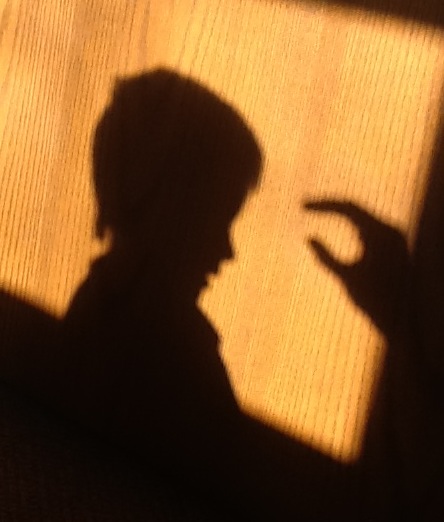
Sunday, April 8, 2012

Easter Sunrise

Now the green blade riseth from the buried grain,
Wheat that in the dark earth many days has lain;
Love lives again, that with the dead has been:
Love is come again, like wheat that springeth green.

In the grave they laid him, love whom men had slain,
Thinking that never he would wake again,
Laid in the earth like grain that sleeps unseen:
Love is come again like wheat that springeth green.


Forth he came at Easter, like the risen grain,
He that for three days in the grave had lain,
Quick from the dead my risen Lord is seen:
Love is come again, like wheat that springeth green.

When our hearts are wintry, grieving or in pain,
Thy touch can call us back to life again,
Fields of our hearts that dead and bare have been:
love is come again, like wheat that springeth green!
-- John M.C. Crum, 1928


Christ is risen!
Alleluia!

Sunday, April 1, 2012

1 in 88, 1 in 252, 1 in a million

The new autism-prevalence estimate numbers are out from the Centers for Disease Control.

One in 88 is the new number. One in 54 among boys, one in 252 among girls.

For Joy, I'm also always aware that the autism diagnosis is on top of her linear nevus sebaceous syndrome, for which numbers are not collected and estimates are rough and wacky. My guess is that the combination makes her, yes, one in a million. At least.

Nobody really knows what the numbers mean (though opinions abound) -- how much of this increase heralds a new and dramatic change for who we are as human beings collectively, and how much involves increased recognition of who we've always been. And here we sit at the close of Developmental Disability Awareness Month (March) and the opening of Autism Awareness Month (April) and I find myself wondering together with Commissioner Sharon Lewis of the Administration on Developmental Disabilities:
At what point do we move from seeking simple awareness about intellectual and developmental disabilities to expecting meaningful respect for people with ID/DD?

Here is our beautiful one-in-a-million Joy:


The artwork above is courtesy of a drawing program on Joy's new iPad, whereby we can easily take photos and trace them via the touch screen. No, she didn't do this herself! Joy actually doesn't like the drawing program any more than she likes to draw on paper. But I think I'm going to need an entire post or more for the iPad, and this one isn't it. The rest of this one is actually about an outing last weekend to the local arboretum, on a one-in-a-million spring morning that came five or six weeks early for how Wisconsin usually operates. (Does this herald a new and dramatic change?)

The cherry blossoms were out in full magnificence:


Joy got to smell the blossoms with a bit of help from her sister:


You can see that we're going to be sun-screening the scalp again this summer. Yes, I did have to reprise the almost-buzz-cut routine again due to stimmy hair-pulling. On the bright side, now that we're on our third go-around with this, it's gotten a whole lot easier than the first time we experienced this.

But speaking of delightfully-stimmy things -- I think that Joy's favorite part of the trip was a bush whose excellent qualities could be experienced in any season:


I think there will be more arboretum trips in our future this summer. It's good cheap entertainment, seeing as how we weren't winners of $640 million... (Yes, JoyDad did go and drop $5 for the thrill of it all. Rose was fascinated -- she'd never seen a lottery ticket before!)


Keep calm, and carry on...

Friday, March 23, 2012

Mad Props

The top definition in the Urban Dictionary for "mad props" goes like this:

"mad" = extreme; "props" = support (in a congratulatory sense)
Mad props to the creator of this site!

In Wisconsin, mad props are due to a dedicated contingent of disability advocates who've been working on various legislative initiatives that were decided this month in the Capitol. It seems almost strange to have so much to celebrate on the disability-advocacy front in Wisconsin, in a year when so many things have careened in such a miserable direction. But it's true -- and it was bi-partisan, too!

I wrote in greater detail on four big legislative wins in a piece on Daily Kos earlier this week, but here's the short version:

Big Win #1: We managed to halt a cash-grab of a bill, a terribly-flawed school voucher program written by the American Legislative Exchange Council (ALEC) and called the Special Needs Scholarship Program Act. I wrote about it on Elvis Sightings back in May and July last year.

Big Win #2: The legislature lifted the caps on enrollment in Wisconsin's long-term care programs, fixing a serious problem that had been created by Gov. Walker's 2011/2013 budget. I've been active on this one too; wrote a personal take here called Freezing the Future last spring when the caps were imposed.

Big Win #3: The legislature passed a bill limiting and regulating the use of seclusion and restraint in public schools, an issue that falls disproportionately on students with disabilities. The vote was unanimous in both chambers!

Big Win #4: The legislature passed the People First bill, updating terminology in Wisconsin statute such that the outdated & pejorative "mental retardation" will be replaced with "intellectual disability." Another unanimous bipartisan win -- down with the "R-word"!

My Wisconsin Partners in Policymaking class had our fingerprints all over these. Many of us had been involved in one or more of these initiatives for years! Now that we were organized as a class, we went into high gear during the last month of the legislative session: testifying, organizing, and writing and calling and lobbying our legislators in person.

When we met last Friday just after a week of all these wins becoming official, we were ready to celebrate! Mad props to every last person in the group! To our great delight, we received an invitation as a group to attend the bill-signing event in Milwaukee in which Governor Walker was to sign Big Wins #2-4 into law! About half of our class were able to attend. (I didn't make it, but was there in spirit -- while hand-delivering thank-you letters at the Capitol to legislators on both sides of the aisle.)

Our training last weekend focused on the ins and outs of the legislative process that we'd just experienced so powerfully, with lessons and role-plays on communicating with law-makers, and how to craft a winning message on our issues. One dominant theme was the importance of a nonpartisan approach. We heard again and again that our issues transcend party lines; that there are disability champions on the right as well as on the left; that we need both parties on our side no matter who's in power.

That's a challenging lesson to internalize at this point in Wisconsin history. I've proudly staked out a personal partisan stance in full-throated opposition to what's been wreaked on Wisconsin from the right this past year. And yet, my Partners in Policymaking family (it's really starting to feel that way) has a range of partisan leanings. I was one of three Partners who sat for hours waiting to testify against the voucher-bill before the Senate Education Committee, sitting in solidarity on this issue right next to a colleague whose political leanings are quite different than mine.

I was tempted at that hearing to rail against the corporatist, cash-grab ALEC roots of the voucher bill, something that Rep. Mark Pocan (D) did very effectively later in the Assembly when the bill came to the floor. However, I resisted the urge and kept my remarks focused on Joy and on the substance of the legislation. Having done so, I was then able to take a thank-you letter to the office of the Republican chair of the Senate Education Committee, and have a cordial and productive conversation with the clerk who had staffed the hearing for him.

I don't know who in our Partners group has signed the recall petition, but I know that it didn't really matter when it came time for people to decide whether or not to attend the bill-signing ceremony. The importance of the legislative victories FAR outweighed any political point-scoring maneuvers. We were enjoined to keep the date & time of the signing a secret such that political protest would not overshadow the content of our victories, and we all did so. After all, it takes a governor to sign a bill into law, and we've got the governor that we've got, not the governor that some of us might wish to have!

Being present at the signing was a powerful experience for my Partners colleagues, as evidenced in post-signing blogging -- there were a ton of photos and stories on Facebook as well. It was jarring and dis-heartening after the ceremony, then, to learn that a spokesman for the Democratic Party of Wisconsin had made the following statement to a news reporter about Governor Walker and the event:

"It’s pretty shocking that he’s using a community that he’s almost ground underfoot in this budget as props, as he’s seeking recall here."

Props. The spokesman for the Democratic Party of Wisconsin thinks that all those incredibly hard-working, politically-savvy, overwhelmingly-committed disability advocates at the bill-signing were nothing more than mindless props for Governor Walker.

We're not props. And being called props makes us... well, MAD.

Both I and another Partners colleague wrote letters to the Democratic Party of Wisconsin, pointing out the error of the spokesman's ways.

We need to work with both parties, celebrate what both parties do right, and hold them accountable for what they don't.

And with that, I promise that the next post will be much more Joy-centric! Because that's what all this policy stuff is about. It's about people, and making better lives for all of us.

Thursday, March 8, 2012

Not So Lucky As All That

Last November I wrote a post with the title Lucky, wherein Rose and I discussed how much things had changed from when I was in elementary school and kids with disabilities didn't get educated in the same schools as their typically-developing peers, if they got to go to school at all.

Her priceless summation of the situation:
It's so lucky for Joy's class that they get to know her and have her in school with them!

Those words are haunting me just now, as we're thinking ahead to next year with IEP-ing and with filling out questionnaires that will inform how next year's classes get assembled.

You see, although students with disabilities at Rose & Joy's elementary school are educated in classrooms with typically-developing classmates, it's not spread out evenly across the school. The school practices "clustering," whereby the kids with IEPs all get assigned into just one or two classrooms per grade, so that the special-ed staff can focus there and collaborate with just one or two regular-ed teachers. (A similar thing happens with students for whom English is a second language).

What ends up happening is that the ratio of disability to non-disability in the cluster-classes gets pretty far out of whack in comparison to the real world. Any behavior issues associated with the disabilites end up concentrated too -- and multiplying upon one another. And it can leave some folks thinking that students with and without disabilities really shouldn't mix, because look at all the problems that arise!!

It also means that Rose is not so lucky as all that.

Like her mother 40 years before... Rose has never been in a homeroom class with a student who has a significant developmental disability.

Just now, that feels incredibly unlucky to me.

Friday, February 17, 2012

Learning About Social Capital (While Being Social Near the Capitol)

Time is flying again. Today's the day I get another chance to be social with my new Partners in Policymaking friends in the capital city (in the shadow of the Capitol), where last month we learned about a simply capital concept -- applying the idea of social capital to our thinking about disabilities.

But first, I still haven't gone into detail about what Wisconsin Partners in Policymaking is. This is Wisconsin's first go at a program that's been around in other states for over 20 years: a leadership training for self-advocates and family members regarding public policy in developmental disabilities. There's a select group of thirty of us from across the state, with 10 self-advocates and 20 family members (mostly parents but a few sibs as well), meeting one weekend per month across six months. We're sponsored by the Wisconsin Board for People with Developmental Disabilities and several other organizations besides.

It's a power-packed group of folks, many of whom have already held various leadership positions and done great advocacy work on their own behalf and on behalf of their loved ones. The point now is to take it to the next level, and start to build a statewide grassroots advocacy network.

As with the LEND program I did two years ago, there's way too much to be able to share it all. I'm going to have to pick and choose what to pass along. From the January meeting, I've already referred to a couple of the readings in my last post.

So I'll just highlight the "social capital" presentation, because I think it's important.

Social capital has to do with the give-and-take, the mutual relationships between people that make society what it is. As a research concept, there are a couple of competing definitions. The World Bank definition, not surprisingly, refers to economic prosperity. Robert Putnam, of Bowling Alone fame, defined social capital as "features of social organization such as networks, norms, and social trust that facilitate coordination and cooperation for mutual benefit."

The point of the Partners presentation -- people with disabilities also have social capital, need social capital, can build social capital. Mutual relationships. People with disabilities aren't just the recipients; social capital is a back-and-forth thing.

I like this a whole lot better as a concept than the natural supports construct I wrote about from LEND a couple of years ago.

Not that "natural supports" isn't on to something important: it points out that all-too-often we focus way too much on the paid personnel who support and accompany people with disabilities, to the exclusion of the more natural web of support that a community provides. Extended family, classmates, neighbors, fellow church-members, there's a whole world of people out there who can provide support in a more natural, normal, it-takes-a-village-to-live-a-good-life kind of way.

The one thing that the concept of natural supports lacks (well, besides an immediately-understandable name) is the element of mutuality. The nomenclature tends to focus the attention on the caregivers/supporters rather than acknowledging that people with disabilities are participants in the relationships, just like people without disabilities.

So, social capital. Give-and-take relationships, a network to cultivate, a concept that applies to everybody, not just people with disabilities.

It strikes me that social capital also applies to some extent in paid relationships. I was on to that back in 2008, when I blogged about how I wanted our house to be a favorite place for the in-home therapists to come! Little gifts of produce from the garden, being organized and courteous and available, making sure the house wasn't too disgustingly grungy. Building social capital -- and we end up with employees who interact with us on a friendship level as well as professional, and remain in contact after the professional relationship ends.

For Joy, she doesn't know she's doing it, but she's been building social capital with smiles, with bye-bye waves, with hugs and requests for attention and just being willing to share her space. Someday I hope she'll do it via conversation -- maybe even blogging?

A few caveats: Autism has its own special layer of challenge when it comes to social capital -- the whole "social deficit" part of the equation, in all its many challenging aspects. I also have some hesitancy about the way "social capital" may tend to define as "poor" those who prefer a less-socially-interactive existence just in general.

Still, I think as a concept "social capital" does a whole lot better than "natural supports" in contributing to what it means to envision people with disabilities living lives of inclusion in mutually-supportive communities.

Back to blogging as social capital -- it occurs to me that a year ago I was doing much better at the give-and-take of social-capital building, the commenting back and forth on other blogs that led to such awesome blog-conversations here. So out of the social-capital loop am I at the moment, in fact, that I've failed to acknowledge receiving an award way back on my New Year's Satisfaction post, where Briane P over at Thinking the Lions bestowed upon me the Smart Cookie award:

Fortunately in this case I've left myself an out by my previous declaration way back in 2008 that I don't really "do" awards. Unless I feel like it. With this one I'm supposed to thank the giver (Thanks, Briane!), link back to him in my post (here ya go), list four little-known facts (oh well), and link to other Smart Cookies (I guess that would build social capital, eh? Oh well, again.)

Anyway, back to the Capitol environs for me, for another heapin' helping of Partners in Policymaking. Stay tuned!

Saturday, January 28, 2012

The Peking Acrobats, Redux

My favorite post from my first year of blogging (all the way back in 2008!) was called Spin, Spin, Spin. It referenced an occasion when I'd gone as a chaperone with Rose's class on a field trip to see the Peking Acrobats, and one particular part of the act where a troupe of women danced while spinning multiple plates on sticks. I mused that the spinning-plates act had a great deal in common with my life!

Actually the controlled chaos of the field trip itself was something of a spinning plates act. Busloads of kindergarteners and first-graders from all over the district descended on Madison's Overture Center, vying for downtown space to disgorge their noisy wriggling kid-loads, who then all had to be organized and seated for the show. There was enough noise and waiting that I recall it was at least mildly anxiety-producing for Rose at the time, at least until the show started.

It wouldn't have been Joy's scene AT ALL.

In fact, four years later, it still isn't. Joy doesn't like chaos, or noise, or waiting. (Heck, who does?) She doesn't cotton much to sitting still, either. Sitting through a long performance in an unfamiliar venue after the chaos, noise and waiting would be a recipe for deep unhappiness, for Joy and for those around her.

When the note came home that Joy's class will have their turn to see the Peking Acrobats this year, I thought hard about how to do it. Of course we could demand that her staff figure out how to make the trip work for her, but at what cost -- and what are we trying to teach? Surely one day we'll be able to manage large public performances: maybe with accommodations, maybe without. But that's a goal to work on in increments, not by jumping into a situation where she'd be locked in to staying on site the full time because of bus transportation, in a noisy sea of hundreds of kids in a huge strange theatre. This is not, we decided, a field trip we want to inflict on Joy at this time.

We got a video instead.

Librarian that I am, I first went looking for a DVD to borrow. It turned out, though, that the only video out was too recent to be in libraries, a just-released DVD from the Peking Acrobats 2011 tour. So we bought a copy of our own.

Turns out there wasn't an online-ordering option, so I had to make a call and talk to a person. The call brought up some interesting echoes of some of the readings we'd done for the Partners in Policymaking program that I'm participating in, that started last weekend. (My next post will have more description about the program, I promise... it's off to an amazing start so far.)

Two of the readings, both by Kathie Snow of DisabilityIsNatural.com, talked about how parents and professionals tend to un-necessarily blab details about their kids'/clients' disabilities in situations and ways that we wouldn't dream of talking about people without disabilities. Here's a sample from The Problem with "Problem" (.pdf):

We don't usually share intimate details of our own lives with casual acquaintances, but we routinely expose the lives of people with disabilities for public consumption. Parents, accustomed to reviewing a child's history with every professional they come in contact with, frequently get in the hapbit of blabbing very intimate details about their children to other parents, educators, and even strangers in the grocery store! ... In general, we reveal intimate details about people with disabilities even though they have never given us their permission to do so. How dare we behave in such an arrogant and patronizing manner?

Even after this, and an additional piece called The Lost Art of Manners (.pdf), I still (gratuitously) told the guy on the phone when ordering the video -- why I was doing it. That I had a daughter with developmental disabilities whose class was going on a field trip to the Peking Acrobats show, the live show wasn't going to work for my girl, so the video was a substitute experience. It was a snap decision, quickly balancing the readings vs. a vague impulse in favor of awareness-raising.

On the one hand, I so totally didn't need to do that. If I'd had a chance to order online, I'd have typed in a bunch of keystrokes and the order would have arrived all depersonalized, no story attached at all.

On the other hand, the fellow who took the order seemed grateful to know that we valued the show enough to make an extra effort. He ended up sending us a free DVD of Jigu! Drums of China, another act represented by the same production company.

I feel pretty good at this point about the decisions we've made regarding this upcoming field trip. Others might disagree, be appalled, whatever.

Actually, the whole disability-mommy-blogging enterprise leaves lots of room for disagreement, appalled, whatever. Or mommy-blogging in general, as we spin intimate life-details into the blogosphere for the consumption of anyone who happens to wander by. In fact, as far as social media is concerned, things have changed since 2001 when Kathie wrote "We don't usually share intimate details of our own lives with casual acquaintances." Facebook and blogging and YouTube et al. have altered that equation immensely, disability or no.

It's a balance. I'll have to continue to cogitate, both about this blog and about my in-person conversations. As Joy continues to grow up, as I learn more and my thinking evolves, the balance will likely change.

Meanwhile, speaking of changing the balance -- I notice as I read how I described my life in the Spin, Spin, Spin post -- there was nothing about policy advocacy in there. No spinning plate designated for legislative contacts or Board work (or protesting, for that matter). How things can indeed change over the course of a couple of years!

Monday, January 23, 2012

Stuff We Don't Let Her Do

So I was home with Joy today in between school and her afternoon therapy session, and she was happily watching a video upstairs in the living room, and I thought "Surely it wouldn't do any harm to sneak downstairs and answer a quick e-mail, right?" So I did that, and then one e-mail led to another, and then I quick peeked at Facebook, and Joy was still making happy sounds and so several minutes did go by before I trotted upstairs again to check.

And there was Joy, with her sister's new Christmas camera, which had been imprudently left on the mantel that morning.

The camera was on, rather surprisingly, since it's one of those little streamlined smaller-than-a-deck-of-cards cameras with a not-at-all obvious on/off switch.

More surprising still were the photos on the camera.

Uh-huh. Joy had been taking pictures.

Here's her foot on top of last year's Christmas fleece-boa:


Here's an artistic blurred shot out the living room window, with a bit of a reflection from the video that was still playing:


Here's a shot of the cabinet under the TV:


And here's a partial self-portrait (there were more complete ones too):


My girl took thirty-six photos before I showed up and put an end to the fun.

We didn't teach her how to do it. We've never let her so much as hold a camera before.

WHAT ELSE can she do that we've never let her try?